
Does the indestructible Martian microbe have a connection to aliens?
Rethinking the Cosmos: From Extremophiles to Unidentified Anomalous Phenomena (UAPs)
The significance of Conan the Bacterium reaches far beyond biology; it strikes at the core of ufology and the study of Unidentified Anomalous Phenomena (UAPs). For over three decades, researchers like Cesare Valocchia have analyzed sighting reports, declassified military documents, and anomalous aerospace sensor data. The primary argument frequently raised by skeptics is the «vastness of space»—the idea that the distances between stars are too immense, and the space environment too lethal, for biological entities to traverse.
Conan the Bacterium directly challenges this terrestrial bias. If a simple Earth microbe can survive massive doses of ionizing radiation, freezing temperatures, and the vacuum of space, it becomes entirely scientifically plausible that advanced biological life forms—or even engineered bio-mechanical entities—could survive interstellar travel.
The UAP phenomenon often displays physics-defying characteristics: instantaneous acceleration, hypersonic velocities without thermal signatures, and trans-medium travel (moving seamlessly from the vacuum of space to our atmosphere and into the oceans). If the intelligence behind these crafts has mastered such advanced propulsion and energy systems, it stands to reason they have also mastered biological survival limits. The extremophiles on Earth act as a living proof of concept. They are the biological equivalent to the technological leaps we witness in UAPs. Rather than viewing UAPs as impossible anomalies, we should understand them as the logical technological extrapolation of the profound biological resilience demonstrated by organisms like Conan
The Historical and Spiritual Dimensions of Extraterrestrial Life
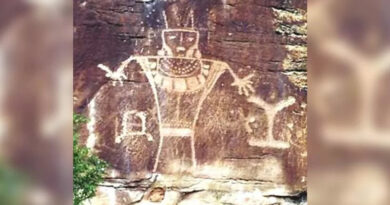
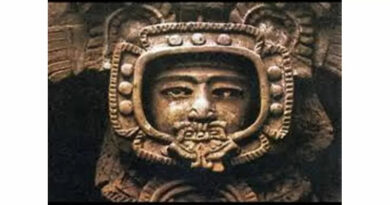
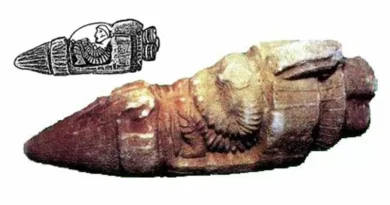
As we bridge the gap between astrobiology and ufology, a third, equally critical dimension emerges: spirituality and human history. UAPs are not an exclusively modern phenomenon born out of the Roswell incident in 1947. Historical archives, ancient texts, and religious iconography are heavily saturated with descriptions of unexplained aerial phenomena and encounters with «non-human» intelligences.
Cesare Valocchia’s extensive research dives deep into this intersection, proposing that the UAP phenomenon has shaped human history and spirituality for millennia. Let us consider the historical accounts of «chariots of fire,» flying shields described by the Romans, or the intricate Vimanas from ancient Hindu texts. For centuries, humanity lacked a technological vocabulary. When early humans witnessed highly advanced extraterrestrial or interdimensional technology, they rationalized these encounters using the only framework available to them: religion and spirituality.
Ancient Texts and Cosmic Seeds
The discovery of extremophiles reignites the theory of Panspermia—the hypothesis that life exists throughout the universe and is distributed by space dust, meteoroids, asteroids, comets, or planetoids. If Conan the Bacterium can survive a journey through the vacuum of space frozen inside a meteor, could the seeds of human life have arrived on Earth in a similar fashion?
Furthermore, Valocchia’s groundbreaking investigations explore how manifestations often categorized as purely spiritual or miraculous—such as Marian apparitions or intense spiritual epiphanies—might actually be deeply connected to the UAP phenomenon. Advanced non-human intelligences, possessing a profound understanding of consciousness and physics, might interact with humanity through interdimensional means. What our ancestors called «angels» or «miracles» could be manifestations of an advanced extraterrestrial presence guiding, influencing, or observing human evolution.
When we understand this, the divide between science and spirituality collapses. The indestructible nature of a Martian microbe, the inexplicable flight characteristics of a UAP, and the ancient accounts of divine intervention are all different chapters of the exact same cosmic book. They point toward a universe that is teeming with life, complexity, and profound mystery.
Conclusion: Embracing the Unknown and the Shift in Human Consciousness
The story of Conan the Bacterium is not just a triumph of biology; it is a catalyst for a global paradigm shift. It proves that the universe is far more resilient, complex, and alive than we ever dared to imagine. As institutional transparency regarding UAPs increases worldwide, the stigma surrounding these topics is finally lifting. We are standing on the precipice of the greatest revelation in human history: the confirmation that we share this vast universe with other intelligences.
To navigate this monumental shift in consciousness, we must rely on rigorous scientific data, historical context, and an open, spiritual mind. We must challenge our terrestrial biases and look at the cosmos—and our own history—with renewed vision.